
sir gawain and the green knight simon armitage pdf
Simon Armitage’s 2007 translation revitalized Sir Gawain and the Green Knight, offering a modern, accessible version often found as a readily available PDF edition.
Significance of Simon Armitage’s Version
Armitage’s translation stands as a landmark achievement, bringing the 14th-century poem to a 21st-century audience with remarkable clarity and poetic force. Its widespread availability as a PDF has democratized access to this crucial work of Middle English literature. He successfully balances fidelity to the original with modern linguistic sensibilities, making the narrative engaging for both students and seasoned scholars.
This edition, frequently encountered in digital format, has sparked renewed interest in medieval romance and influenced contemporary poetry, solidifying Sir Gawain and the Green Knight’s enduring legacy.

The Original Text and Its Context
Sir Gawain and the Green Knight originates from Middle English manuscripts, a chivalric romance predating widespread printing, now accessible via modern PDF translations.
Middle English Origins
Sir Gawain and the Green Knight exists as a manuscript from the late 14th century, written in Middle English—a language significantly different from modern English. This presents challenges for contemporary readers, making accessible translations, like Simon Armitage’s, crucial. The poem’s original form, often studied through digitized manuscripts and now conveniently available as a PDF, reflects the linguistic and cultural landscape of medieval England; Understanding these origins enhances appreciation for Armitage’s skillful adaptation, bridging the gap between past and present for a wider audience.
Authorship and Historical Background
The author of Sir Gawain and the Green Knight remains unknown, adding to the poem’s mystique. It likely originated in the Northwest Midlands of England during the 14th century, a period steeped in chivalric romance and courtly ideals. Simon Armitage’s translation, frequently accessed as a PDF, brings this historical context to life. The poem reflects societal values, religious beliefs, and literary conventions of the time, offering insights into medieval life, skillfully rendered in a modern voice.
Themes in the Original Poem
Sir Gawain and the Green Knight explores complex themes of chivalry, honor, and temptation, central to medieval courtly life. The poem delves into the conflict between pagan and Christian beliefs, and the nature of truth versus deception. Simon Armitage’s accessible PDF translation highlights these enduring themes, making the narrative resonate with modern readers. The beheading game serves as a potent symbol, examining courage and the acceptance of fate.

Simon Armitage: The Translator
Simon Armitage, a leading British poet, crafted a groundbreaking translation of Sir Gawain, widely available as a convenient PDF for study.
Armitage’s Poetic Style
Simon Armitage’s poetic style is characterized by a directness and accessibility, eschewing overly academic language for a contemporary voice. This approach is brilliantly showcased in his translation of Sir Gawain and the Green Knight, making the medieval text resonate with modern readers. He maintains stylistic spirit, rather than strict literalness, resulting in a vibrant and engaging PDF version. His work often incorporates colloquialisms and a narrative drive, enhancing the poem’s storytelling power and ensuring its continued relevance. This translation, frequently distributed as a PDF, demonstrates his skill in bridging the gap between centuries.
Approach to Translation: Fidelity vs. Modernity
Armitage skillfully balances fidelity to the original Middle English text with the demands of modern readability in his Sir Gawain and the Green Knight translation. He prioritizes capturing the poem’s spirit and energy over a strictly literal rendering, resulting in a dynamic and accessible PDF version. This approach allows contemporary audiences to engage with the narrative without being hindered by archaic language. His translation, widely available as a PDF, isn’t constrained by outdated phrasing, yet remains true to the source’s core themes and stylistic nuances.
Previous Translations and Their Limitations
Prior to Armitage’s 2007 work, translations of Sir Gawain and the Green Knight often struggled with accessibility, frequently employing overly academic or archaic language. These earlier versions, while valuable for scholarly purposes, often presented barriers for general readers seeking to enjoy the poem’s narrative. The availability of a clear, modern PDF translation was limited. Armitage’s version addresses these limitations, offering a vibrant and engaging experience, readily accessible in PDF format, bridging the gap between scholarship and popular readership.

Key Elements of Armitage’s Translation
Armitage’s translation prioritizes modern language and accessibility, preserving the original’s alliteration while offering a compelling narrative, often distributed as a convenient PDF.
Language and Accessibility
Simon Armitage deliberately employs contemporary language, making the 14th-century poem remarkably accessible to modern readers, unlike many older translations. This approach avoids archaic phrasing, ensuring a smoother reading experience, particularly beneficial when encountered as a PDF. He balances fidelity with readability, retaining the spirit of the original while removing linguistic barriers. This translation liberates Gawain, allowing a wider audience to engage with the chivalric tale, and the PDF format further enhances its reach and usability for students and enthusiasts alike.
Preservation of Alliteration and Rhyme
Despite modernizing the language, Armitage skillfully preserves the original poem’s crucial alliterative verse form and rhyming structure, a hallmark of Middle English poetry. This isn’t a literal replication, but a sensitive adaptation, maintaining the musicality and rhythmic drive of the narrative. Accessing the poem as a PDF allows close study of these poetic devices. He avoids simply mimicking the original, instead recreating its effect for a contemporary audience, ensuring the poem’s artistry remains vibrant and engaging.
Modernizing the Narrative Voice
Armitage deliberately employs a contemporary narrative voice, eschewing archaic language for a more direct and accessible style, particularly noticeable when reading the PDF version. This choice doesn’t diminish the poem’s medieval setting but rather invites a broader readership. He utilizes colloquialisms and phrasing that resonate with modern ears, making Sir Gawain feel surprisingly immediate. This approach liberates the story, allowing its themes to connect powerfully with 21st-century audiences without sacrificing its inherent dignity.

Analyzing Specific Sections of the Translation
Armitage’s PDF translation brilliantly captures the tension of the beheading game, Gawain’s perilous journey, and the complex temptations within Bertilak’s castle.
The Challenge at Camelot
Armitage’s PDF rendering of the initial challenge by the Green Knight at Camelot is strikingly vivid. He masterfully conveys the disruption of Arthur’s court and the unsettling nature of the Green Knight’s proposition. The poem’s opening, as presented in this accessible format, emphasizes the boldness of the challenge—a beheading game—and Gawain’s subsequent acceptance.
Armitage preserves the original’s dramatic irony, highlighting the court’s initial amusement contrasted with the looming danger. The PDF allows for close reading of the alliterative verse, showcasing Armitage’s skill in maintaining the poem’s stylistic spirit while ensuring modern readability.
Gawain’s Journey to the Green Chapel
Within the PDF version of Sir Gawain and the Green Knight, Armitage powerfully depicts Gawain’s arduous journey. He emphasizes the harsh winter landscape and the psychological toll on the knight as he seeks the Green Chapel. The translation effectively conveys Gawain’s growing fear and isolation, mirroring the original’s sense of foreboding.
Armitage’s accessible language in the PDF allows readers to fully appreciate the symbolism of the journey—a test of Gawain’s chivalry and faith. The detailed descriptions of the wilderness are rendered with striking clarity.
The Temptation Scenes at Bertilak’s Castle
Armitage’s translation, readily available as a PDF, masterfully portrays the complex temptation scenes at Bertilak’s castle. He captures the escalating tension as Bertilak’s wife attempts to seduce Gawain, highlighting the knight’s internal struggle between courtly love and his vows of chastity.
The PDF version allows close reading of Armitage’s nuanced language, revealing the subtle power dynamics and moral ambiguities. He skillfully renders the original’s suggestive imagery, making these pivotal scenes both captivating and thought-provoking for modern readers.
The Beheading Game and its Resolution
Armitage’s PDF translation vividly depicts the shocking beheading game and its intricate resolution. He conveys the initial bravado of the challenge, Gawain’s year-long journey, and the suspenseful return to the Green Chapel with remarkable clarity.
The PDF format facilitates detailed analysis of Armitage’s rendering of the final confrontation, emphasizing the symbolic weight of the three blows and the revelation of Bertilak’s true identity. It showcases how Armitage maintains the poem’s blend of chivalry and supernatural elements.

Critical Reception and Reviews
Armitage’s PDF translation garnered praise for its accessibility and stylistic fidelity, becoming a standard for students and readers alike, sparking robust analysis.
Initial Responses to the Translation
Simon Armitage’s 2007 translation of Sir Gawain and the Green Knight was immediately lauded for bridging the gap between the Middle English original and contemporary readers. The widespread availability of the work as a PDF contributed to its rapid adoption in academic settings and among general audiences.
Early reviews highlighted Armitage’s success in maintaining the poem’s alliterative verse and narrative drive while employing accessible modern language. Critics noted the translation’s ability to feel both fresh and respectful of the source text, making it a standout rendition.
Academic Reviews and Analysis
Scholarly reception of Armitage’s translation, frequently accessed as a PDF, centered on its skillful balance of fidelity and modernization. Analyses explored how his choices impacted interpretations of chivalry, temptation, and the poem’s complex religious symbolism.
Researchers appreciated the translation’s clarity for students encountering the text for the first time, while also acknowledging its poetic merit as a standalone work. Debates arose regarding the extent of Armitage’s interpretive interventions, but overall, it was deemed a significant contribution.
Public Perception and Popularity
Simon Armitage’s translation of Sir Gawain and the Green Knight, widely available as a PDF, garnered significant public interest, boosted by David Lowery’s 2021 film adaptation, “The Green Knight.” This accessibility broadened the poem’s readership beyond academic circles.
Reviews often praised its readability and engaging narrative, making the medieval romance appealing to modern audiences. The translation’s popularity demonstrates a renewed fascination with Arthurian legends and medieval literature, fueled by both scholarly and popular engagement.
Connections to Armitage’s Translation
Simon Armitage’s accessible PDF translation of Sir Gawain and the Green Knight directly influenced the 2021 film adaptation, “The Green Knight,” with its modernized language informing the screenplay’s tone and dialogue. The translation’s success sparked renewed academic interest, prompting further study of the original Middle English text.
Its popularity also encouraged wider exploration of medieval romance, demonstrating how a skillful translation can bridge historical and contemporary literary landscapes.
Differences and Interpretations
Armitage’s PDF translation prioritizes readability, sometimes diverging from literal accuracy to capture the original’s spirit, unlike more academic versions. Interpretations vary; some view his choices as liberating Gawain, while others critique a loss of nuance.
Compared to Tolkien’s, Armitage’s version is less focused on linguistic reconstruction, instead emphasizing a dynamic, contemporary poetic experience for modern readers engaging with the text.
Impact on the Poem’s Modern Relevance
Armitage’s accessible PDF translation significantly boosted the poem’s popularity, particularly among students and general readers. The 2021 film, “The Green Knight,” further amplified interest, drawing heavily from the narrative.
His work demonstrates the enduring power of medieval romance, proving its themes of chivalry, temptation, and honor resonate today, fostering a renewed appreciation for this classic work of literature.

Themes Explored in Armitage’s Translation
Armitage’s PDF translation powerfully conveys themes of chivalry, honor, temptation, and the complex interplay between Christian and pagan beliefs within the narrative.
Chivalry and Courtly Love
Armitage’s accessible PDF translation brilliantly showcases the poem’s exploration of chivalric ideals and courtly love, central to Arthurian legend. Sir Gawain’s journey embodies the knightly virtues – honor, courage, and loyalty – yet is constantly tested. The temptations at Bertilak’s castle probe the boundaries of these codes, questioning their sincerity.
Furthermore, the poem subtly examines the complexities of courtly love, presenting it not as idealized romance, but as a potentially disruptive force within the rigid social structure of Camelot, all vividly rendered in the translation.
Honor, Courage, and Temptation
Simon Armitage’s PDF translation powerfully portrays Sir Gawain’s internal struggle with honor, courage, and temptation. Accepting the Green Knight’s challenge demands immense courage, yet maintaining his knightly honor proves far more difficult amidst Bertilak’s seductive games.
The poem, through Armitage’s accessible language, explores how easily even the most virtuous knight can falter when faced with desire and the fear of dishonor, revealing the fragility of human integrity.
Christianity and Paganism
Simon Armitage’s PDF version of Sir Gawain and the Green Knight masterfully highlights the poem’s complex interplay between Christianity and lingering pagan beliefs. Gawain’s shield, emblazoned with the Virgin Mary, represents Christian faith, yet he confronts a distinctly pagan, supernatural challenge from the Green Knight.
Armitage’s translation subtly reveals how these forces coexist, influencing characters and events within the Arthurian world, creating a fascinating tension.
The Nature of Truth and Deception
Simon Armitage’s accessible PDF translation of Sir Gawain and the Green Knight powerfully explores the elusive nature of truth and the pervasive presence of deception. Bertilak’s hunting games and the Lady’s temptations are designed to test Gawain’s honesty and integrity.
Armitage skillfully portrays how appearances can be misleading, and the poem questions whether true chivalry demands absolute truthfulness, even at personal cost.
The PDF Format and Accessibility
Armitage’s translation of Sir Gawain and the Green Knight is widely available as a convenient PDF, enhancing its accessibility for students and readers.
Advantages of the PDF Version
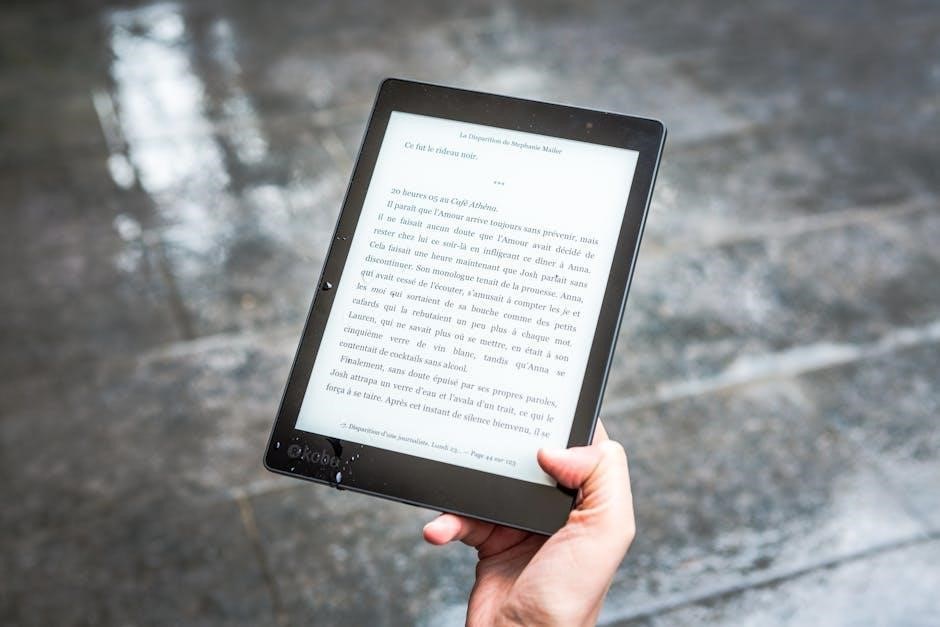
The PDF format offers numerous benefits for engaging with Simon Armitage’s translation of Sir Gawain and the Green Knight. Its portability allows for study on various devices, while features like searchability streamline research. PDF versions often include helpful footnotes and introductory materials, enriching the reading experience. Furthermore, digital distribution ensures widespread access, making this significant literary work readily available to a global audience, particularly within educational settings where cost-effectiveness is crucial.
Availability and Distribution
Simon Armitage’s translation of Sir Gawain and the Green Knight enjoys broad distribution, notably as a widely accessible PDF. Major online booksellers offer both physical copies and digital downloads. Many academic institutions provide the PDF through library databases and course materials. Free, legally sourced versions are also available online, promoting accessibility. This widespread availability ensures students and enthusiasts can easily engage with this landmark translation, fostering continued scholarly interest and appreciation.
Use in Educational Settings
Simon Armitage’s Sir Gawain and the Green Knight PDF is a staple in medieval literature courses. Its accessible language, while retaining the poem’s spirit, makes it ideal for students encountering Middle English for the first time. The PDF format facilitates annotation and close reading. Educators appreciate its affordability and ease of distribution, encouraging in-depth analysis of chivalry, temptation, and courtly love. It sparks vibrant classroom discussions and assignments.
Comparing Armitage’s Translation to Others
Armitage’s version contrasts with Tolkien’s scholarly approach and Merwin’s lyricism; its modern voice, often accessed as a convenient PDF, stands apart.
J.R.R. Tolkien’s Translation
J.R.R. Tolkien’s translation, completed much earlier, presents a more academic and philologically detailed rendering of Sir Gawain and the Green Knight. While highly respected for its accuracy and extensive notes, it often feels less accessible to modern readers than Armitage’s version.
Unlike the readily available PDF of Armitage’s work, Tolkien’s translation can be more challenging to navigate for those unfamiliar with Middle English scholarship. It prioritizes a faithful representation of the original text’s complexities, sometimes at the expense of poetic flow and immediate engagement.
W.S. Merwin’s Translation
W.S. Merwin’s translation of Sir Gawain and the Green Knight offers a distinct stylistic approach, characterized by its spare and minimalist language. It aims for a poetic resonance different from both Armitage’s and Tolkien’s versions, prioritizing a sense of stark beauty and emotional depth.
However, like Tolkien’s work, Merwin’s translation isn’t as widely circulated in convenient PDF formats as Armitage’s. It can feel more distant from the original’s narrative energy, offering a contemplative rather than a dynamic reading experience.
Strengths and Weaknesses of Each Version
Armitage’s translation excels in accessibility, offering a modern voice easily found as a PDF, while Tolkien prioritizes scholarly accuracy. Merwin provides poetic minimalism, though less readily available digitally. Armitage balances fidelity with readability, sometimes sacrificing nuance for flow.
Tolkien’s is dense, demanding patience; Merwin’s, while beautiful, can feel emotionally detached. The widespread availability of Armitage’s PDF makes it ideal for students, despite its interpretive choices.
Impact on Modern Literature
Armitage’s accessible PDF translation sparked renewed interest in medieval romance, influencing contemporary poetry and demonstrating the enduring power of Sir Gawain.
Influence on Contemporary Poetry
Simon Armitage’s impactful translation, widely circulated as a PDF, demonstrably influenced contemporary poets through its innovative blend of fidelity and modernity. His approach—maintaining alliteration while employing accessible language—provided a model for reimagining classic texts. Armitage proved that medieval narratives could resonate with modern audiences, inspiring poets to explore similar stylistic techniques and engage with historical sources. The translation’s success encouraged a broader appreciation for poetic translation as a creative act, fostering experimentation and a renewed interest in narrative poetry within the contemporary literary landscape.
Revival of Interest in Medieval Romance
Simon Armitage’s accessible PDF translation of Sir Gawain and the Green Knight significantly contributed to a revival of interest in medieval romance. By presenting the complex narrative in a compelling, modern voice, Armitage captivated new readers and scholars alike. This renewed accessibility, coupled with the release of David Lowery’s film adaptation, sparked broader cultural engagement with Arthurian legends and the genre of medieval romance, prompting further exploration of these historically significant tales.
Armitage’s Contribution to Literary Translation
Simon Armitage’s work on Sir Gawain and the Green Knight, widely available as a PDF, represents a landmark achievement in literary translation. He skillfully balanced fidelity to the original Middle English with modern readability, demonstrating innovative techniques. Armitage proved that translations could be both scholarly and engaging, influencing contemporary poets and establishing a new standard for rendering classic texts. His approach broadened the audience for medieval literature significantly.

Resources for Further Study
Numerous online texts, academic databases, and critical editions enhance understanding of Sir Gawain; the Armitage PDF is a key starting point for research.
Online Texts and Articles
Accessing Sir Gawain and the Green Knight resources online is remarkably easy, with many sites offering the poem’s text, often including Simon Armitage’s acclaimed translation in PDF format. Websites dedicated to medieval literature frequently host scholarly articles analyzing the poem’s themes and Armitage’s stylistic choices.
Further exploration can be found through university course pages and digital libraries, providing contextual essays and critical interpretations. Searching for “Sir Gawain Armitage PDF” yields numerous results, facilitating convenient study and analysis of this significant work of Middle English literature.
Academic Databases and Journals
Scholarly engagement with Sir Gawain and the Green Knight, particularly Simon Armitage’s translation, thrives within academic databases like JSTOR, Project MUSE, and MLA International Bibliography. These platforms host peer-reviewed articles dissecting the poem’s complexities, including analyses of Armitage’s linguistic choices and the impact of his accessible PDF versions.
Researchers explore themes of chivalry, temptation, and the poem’s enduring relevance. Journal articles often compare Armitage’s work to previous translations, evaluating its strengths and contributions to medieval literary studies, offering in-depth critical perspectives.
Companion Guides and Critical Editions
Several companion guides enhance understanding of Sir Gawain and the Green Knight and Simon Armitage’s translation, often referencing the widely circulated PDF format. These resources provide contextual background, detailed analyses of key passages, and explorations of the poem’s historical and cultural significance.
Critical editions, like those published by Norton or Broadview Press, include scholarly introductions, annotations, and essays examining Armitage’s stylistic choices and the poem’s enduring appeal to modern readers, aiding comprehensive study.
Armitage’s accessible translation, frequently accessed as a PDF, ensures Sir Gawain remains relevant, captivating 21st-century readers with its timeless themes.
Armitage’s Translation as a Landmark Achievement
Simon Armitage’s rendition of Sir Gawain and the Green Knight stands as a pivotal moment in the poem’s reception, particularly with its widespread availability as a PDF. He successfully bridges the gap between Middle English and contemporary audiences, making the complex narrative remarkably accessible. This translation isn’t merely a rendering of words; it’s a re-imagining that preserves the original’s spirit while employing a distinctly modern poetic voice. The PDF format further democratizes access, fostering scholarly study and casual enjoyment alike, solidifying its place as a landmark achievement in literary translation and medieval studies.
The Poem’s Continued Relevance in the 21st Century
Sir Gawain and the Green Knight, especially through Simon Armitage’s accessible PDF translation, resonates deeply today. Its exploration of chivalry, temptation, and truth remains strikingly relevant in a modern context. The poem’s themes of honor and deception continue to provoke thought, while the narrative’s enduring power captivates new readers. Armitage’s version, easily distributed as a PDF, ensures the poem’s continued presence in education and popular culture, proving its timeless appeal and lasting literary significance.